The studio
Stepping through the door.And laying down a sheet of paper.
The first thing you notice on entering a studio is not what you are about to learn. It is the silence, the light, the smell of paper. The rest — the line, the colour, the likeness — comes later, much later than you might imagine.
The table
A table, a sheet of paper, a glass of water. It is little, and it is already a great deal. This deliberate simplicity is not a style choice — it clears space for the only thing that matters: learning to look.
No one starts off well. That is not the point. The point is: are you willing to stay in front of the page long enough to really see it?

Before the first line
“The silence before the line is often worth more than the line itself.”
It is easy to assume a drawing class is first about technique. It is first about learning to be quiet in front of what you are looking at. Technique comes afterwards — it comes almost by itself, once you have learned to look.
That is why no two classes are alike. Each person arrives with their own silence, their own impatience, their own reasons. Isabelle's role is not to bring a method. It is to accompany each person towards their own way of looking.
Not being alone
Drawing in a group is not the same as drawing together. It means benefiting, almost without noticing, from the sidelong glances of others. You see your own page differently when you sense that, around you, other eyes are searching for their own accuracy.
There is no comparing one page with another. Everyone moves at their own pace, everyone stumbles in their own way — and these stumbles, set side by side, become the real substance of the class.
Teaching
Teaching drawing is not a trade apart from being an artist. It is the same way of looking, exercised differently. What Isabelle learns while painting, she also learns while accompanying someone in front of their page. Sometimes more so.
A sketchbook, a caricature, a painting, a class: these are not four separate practices. They are one practice, and four ways of living in its time.
Joining a class
The calendar, venues, prices and registration process are detailed on each course page. They matter when you commit — not when you are still choosing.
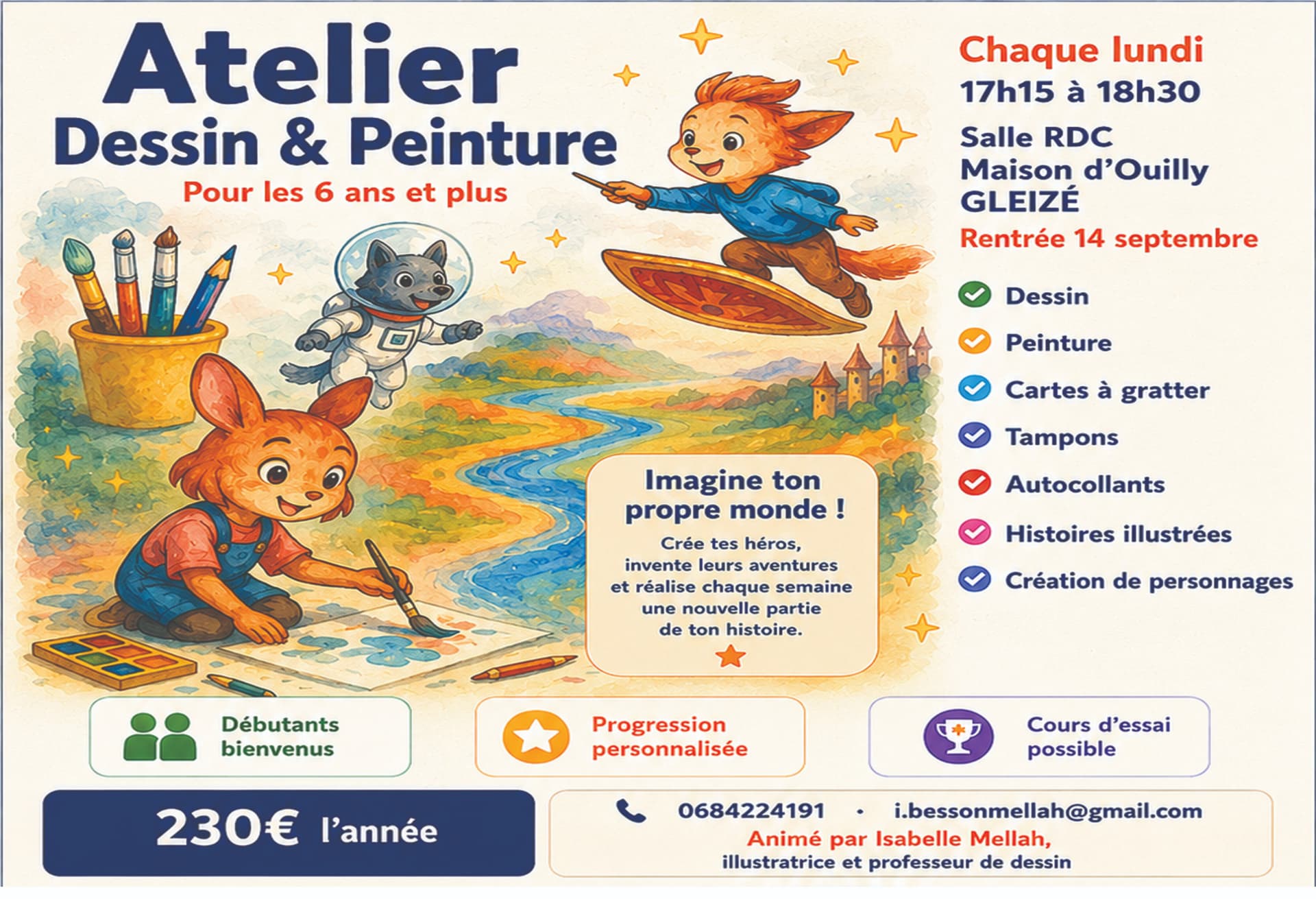
- Atelier Dessin & Peinture — enfantsEnfants à partir de 6 ans
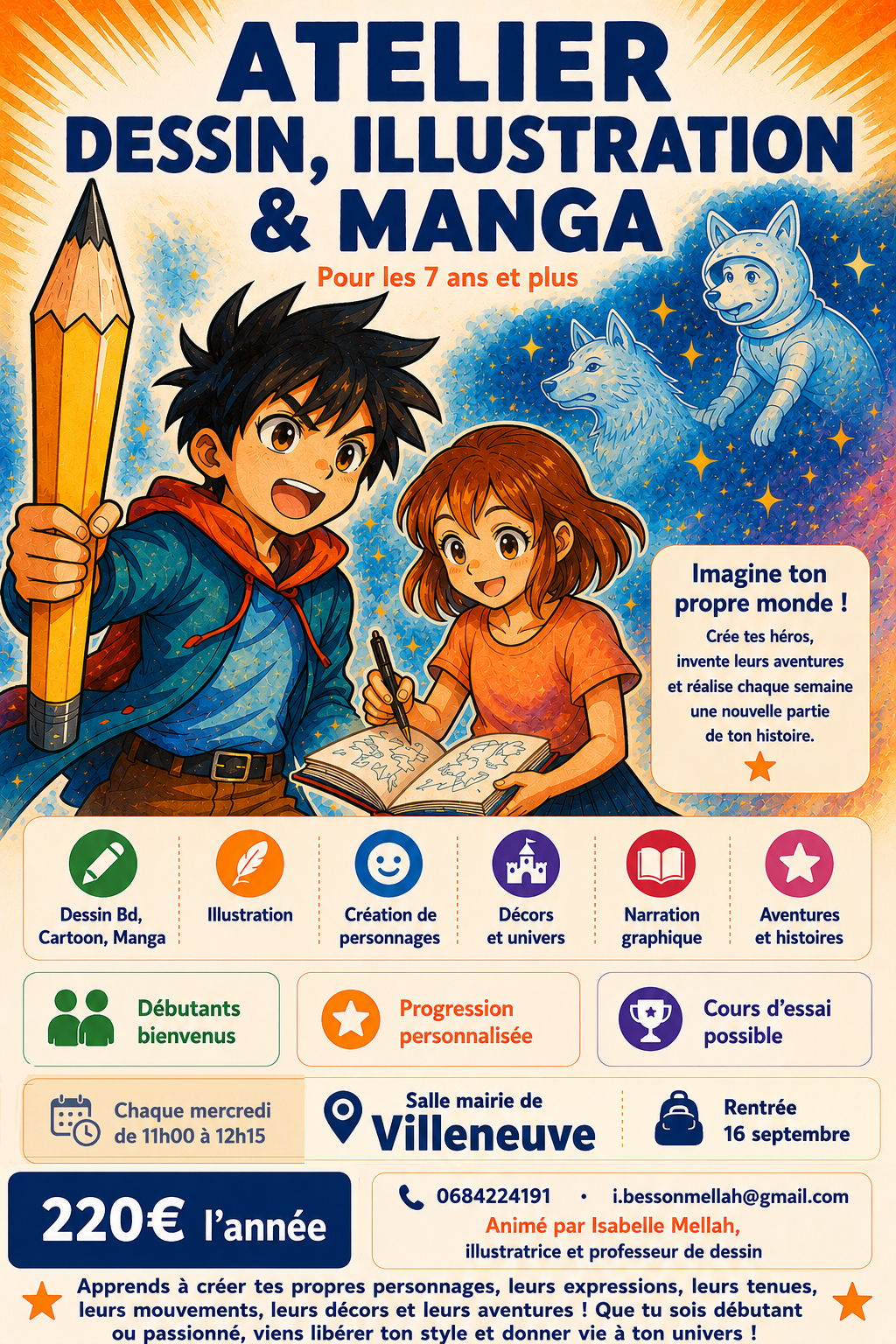
- Atelier Dessin, Illustration & Manga — GleizéEnfants et adolescents à partir de 7 ans
- Atelier Dessin, Illustration & Manga — VilleneuveEnfants et adolescents à partir de 7 ans
- Dessin, Peinture et univers illustrésAdultes et adolescents (à partir de 11 ans)


The sketchbook keeps. The painting holds. The caricature gives. The studio shares.
One way of looking, four ways of living in its time.